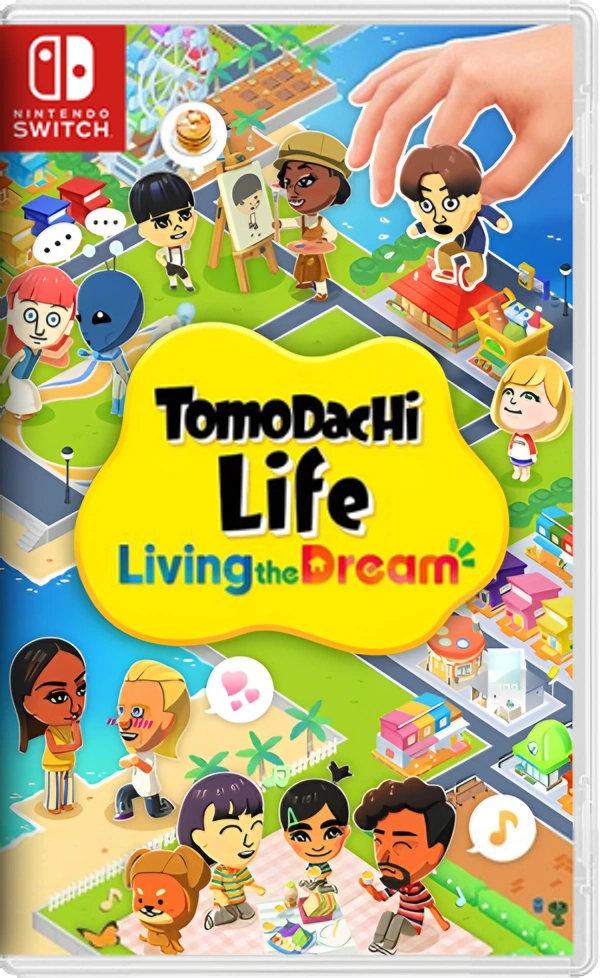
An island story shaped by your own cast
The starting idea is wonderfully personal: your island can be populated by versions of friends, family or entirely fictional people. The entertainment comes from seeing that cast together, rather than steering a single hero through a fixed campaign. Familiar faces can make an ordinary conversation memorable, while an invented character gives you room to try a different personality or visual style.
Think of the island as an ongoing collection of little stories. You do not need a perfect master plan before the first resident arrives. A small cast with recognizable identities is often more interesting to follow than a large group you have rushed through the creator. Leave room for the game to surprise you instead of treating every interaction as a problem that must be optimized.
How Tomodachi Life: Living the Dream plays
Nintendo’s core activities include creating Miis, learning their preferences, giving them food and clothes, decorating homes and shaping the island around them. Their relationships can develop in different directions. Watching how residents respond is part of the appeal: the same gift or encounter does not need to produce the outcome you had imagined.
A useful rhythm is to check on a few residents, notice what has changed and then choose one creative project. Perhaps you want a room to suit someone better, or a public space that gives the community a stronger identity. Alternating observation with a small design task keeps a session focused without turning the whole island into a checklist.
Start with Miis you will enjoy spending time with
The character creator is worth exploring slowly. Nintendo provides a detailed creation route and a question-based way to get help. Pick whichever keeps the process enjoyable for you. Accuracy is only one possible goal; a deliberately exaggerated character can be just as entertaining as a careful likeness.
For a first island, choose a manageable group and give each person a clear idea. You might imagine a serious neighbor next to an enthusiastic performer, or create a cast around a favorite hobby. These are creative starting points rather than rules. Once the residents feel distinct to you, their everyday interactions become easier to remember and talk about.
Customization, relationships and everyday discoveries
Homes, shops and shared spaces help give the island its identity. Nintendo also describes making custom items and exchanging Miis and creations with a nearby player through local wireless. This is a creative social feature; it should not be confused with two people simultaneously controlling the same island.
When decorating, choose a mood before buying or placing everything you can. A compact neighborhood, a colorful shopping area or a deliberately eccentric home is a clearer project than changing the whole island at once. Give yourself time to look at the result. If an arrangement no longer feels right, reworking it can be part of the fun rather than evidence that your first idea failed.
Beginner tips for a more enjoyable first island
The best first-session goal is to become comfortable with the people and spaces you have created. There is little value in copying another player’s island if you would rather invent your own setting. Use screenshots as inspiration for a mood or layout, then change the details to make the idea yours.
- Begin with a small, memorable cast so you can follow each resident’s story.
- Try one gift or decorating idea at a time and pay attention to the reaction.
- Mix character visits with a single achievable design project.
- Let unexpected relationships become part of the story instead of demanding one exact outcome.
- Check the on-screen explanations when a new feature appears; do not assume it works like the older 3DS game.
Who will enjoy this Nintendo Switch life simulation?
Choose Living the Dream if you like character creation, playful social situations and a world that becomes more personal as you spend time with it. It is a different kind of satisfaction from winning a race or clearing a difficult action stage: the reward is often a moment that feels funny or specific to your own cast.
Players who want constant combat, precise platforming or a tightly directed story may prefer another genre. If you enjoy setting your own creative goals, however, a short visit to the island can be worthwhile even when you are not pursuing one large objective. The screenshots above are a useful way to judge whether its character style and atmosphere appeal to you.
Frequently asked questions
Is Living the Dream the old Nintendo 3DS game?
No. Tomodachi Life: Living the Dream is a Nintendo Switch release. This page covers that title rather than the earlier Tomodachi Life for Nintendo 3DS.
Is Tomodachi Life: Living the Dream a multiplayer game?
The main island experience is single-player. Nintendo lists local wireless exchanges of Mii characters and custom creations with a nearby player; additional systems and games are required.
Should I create lots of residents immediately?
A smaller starting cast can make it easier to learn who everyone is and follow their relationships. Add more when you have an idea you are excited to explore.
References
- Nintendo game features and platform information
- Nintendo: character creation and local sharing trailer
- Nintendo developer interview: characters with their own personalities
Content updated: