A treasure hunt with an unusual supporting cast
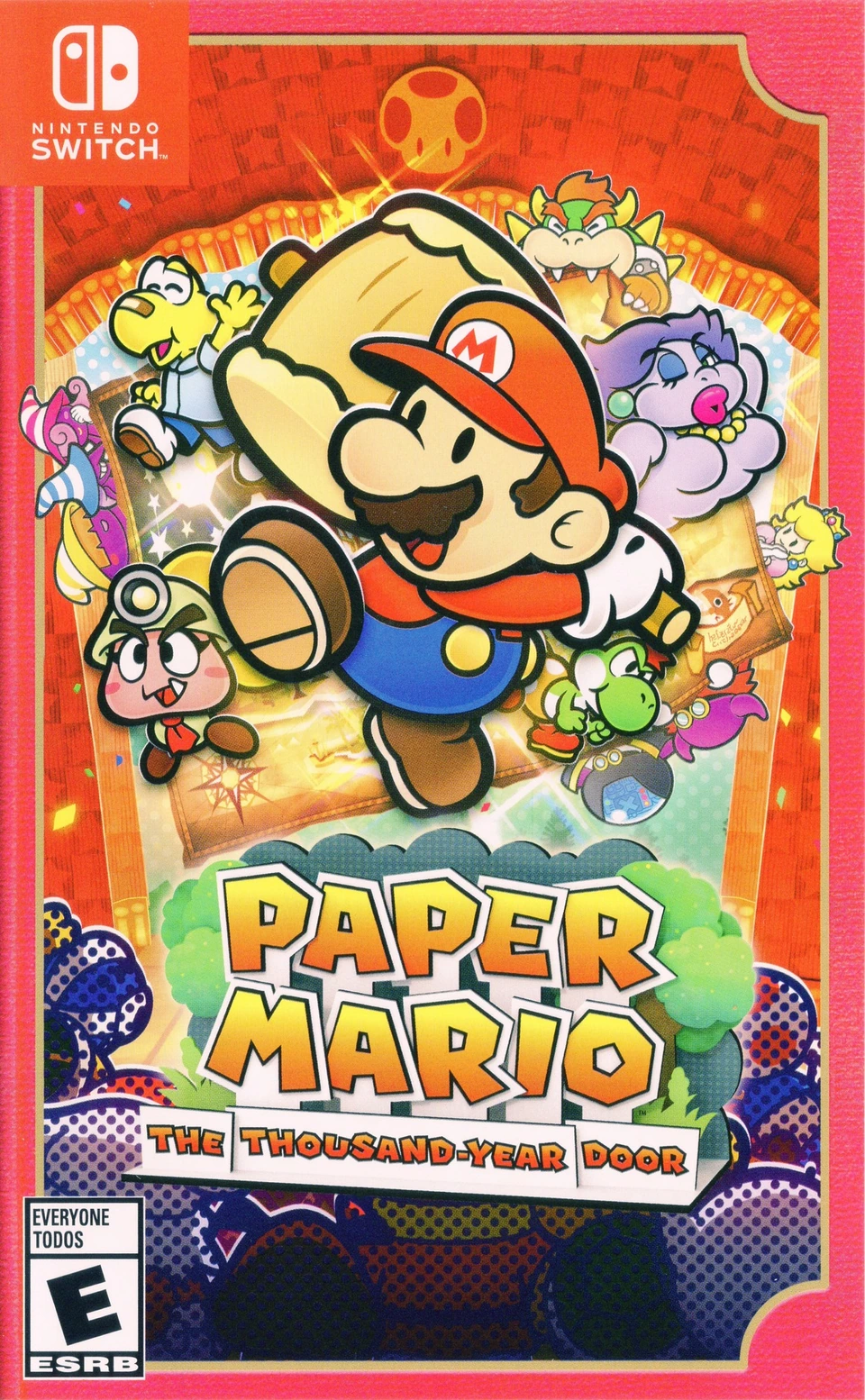
Mario follows a map from Princess Peach into the mystery surrounding the Thousand-Year Door. The X-Nauts are also pursuing the treasure, and the journey brings him together with partners who do much more than accompany him in conversation. The paper presentation gives each place and character a distinctive stage-like quality.
Take time to enjoy what people say. The attraction is partly in the contrast between a familiar hero and a world full of unusual personalities. Rushing from battle to battle can miss the atmosphere that makes this Mario RPG different from a game built primarily around movement challenges.
Turn-based decisions with active timing
Battles combine menu choices with timed actions. Choosing an attack is only part of the process; learning its timing helps you get more from the move. Partners and badges add options, giving you reasons to think about how the current encounter differs from the previous one.
When learning a new action, pay attention to the cue instead of pressing repeatedly and hoping for the right result. A reliable basic move can be more useful than an impressive-looking option you cannot yet perform consistently. Treat an ordinary encounter as a chance to practice one detail rather than a test of everything you have learned.
Partners connect exploration and problem-solving
Your companions bring abilities that matter outside combat as well. A place that first seems unreachable or unremarkable can look different once you consider the right partner. Keep that connection in mind when an exploration puzzle appears to have no obvious answer.
If you feel stuck, first describe the obstacle. Is it a question of reaching something, learning something or changing how Mario interacts with the scenery? Thinking about the problem in that way can make the relevant ability easier to recognize without immediately searching for a step-by-step solution.
Beginner tips for the Switch Paper Mario adventure
The game becomes easier to read when you learn its systems in small pieces. Let the early encounters establish a comfortable rhythm before trying to optimize every badge and move.
- Practice timing with an action you use often.
- Read badge effects and change your plan for a specific challenge.
- Think about partner abilities when you revisit a familiar place.
- Talk to characters if you need context for the next objective.
- Separate this Nintendo Switch remake from the original GameCube release when checking file information.
Who will enjoy The Thousand-Year Door?
Choose it if you like humorous characters, a sense of place and battles that combine deliberation with a small physical action. The partners give the journey a shared-adventure feeling even though it is a single-player game.
If your favorite Mario activity is fast, uninterrupted jumping, expect a different tempo. Here, conversations and exploration are part of the reason to play. It is a good fit when you want a Mario story you can settle into rather than a short course to race through.
Frequently asked questions
Is this the GameCube version?
This page covers the Nintendo Switch remake, not the original GameCube release.
Are the battles purely menu-based?
They are turn-based, but timed actions also matter. Practicing a move’s timing can improve how comfortably you handle encounters.
Do partners only help in battles?
No. Partner abilities are also important when exploring and solving problems in the world.
References
- Nintendo product information
Content updated: